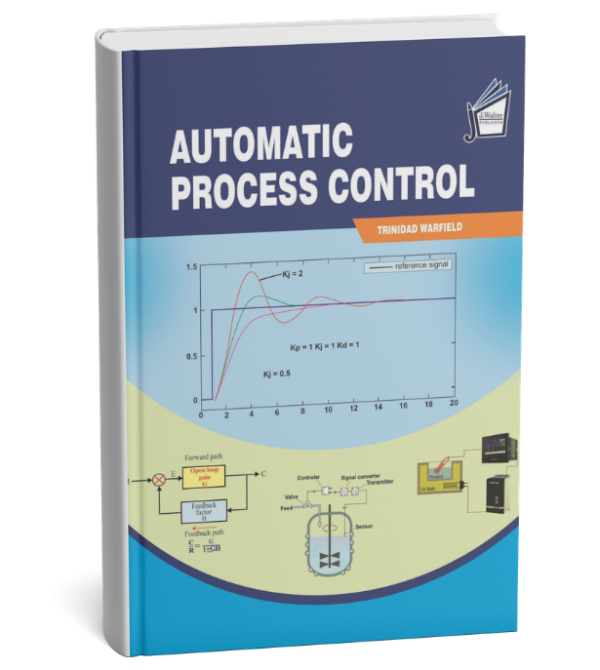
Automatic control systems have been in use since ancient times, with early innovations such as water clocks developed by Greeks and Arabs in the third century BC to measure time accurately. Today, control systems are everywhere, quietly governing the behavior of devices to ensure predictable and consistent performance. They range from simple electrical mechanisms to highly advanced computer-controlled systems. Modern control engineering focuses on advanced concepts such as Multiple Input Multiple Output (MIMO) systems, state-space methods, and the use of eigenvalues and vectors to analyze system behavior. Instead of relying on complex higher-order differential equations, contemporary approaches simplify analysis by transforming them into first-order equations using vector methods.
This book provides a comprehensive understanding of both the theory and practical aspects of control engineering. It covers key topics such as mathematical modelling, feedback systems, transient response analysis, and system characteristics like sensitivity, steady-state error, and disturbance rejection. Additionally, it explores important techniques including root locus, compensation methods, frequency response, and Nyquist stability analysis. Written in a clear, student-friendly manner with ample examples, the book serves as a valuable resource for students, educators, and professionals seeking in-depth knowledge of control systems.