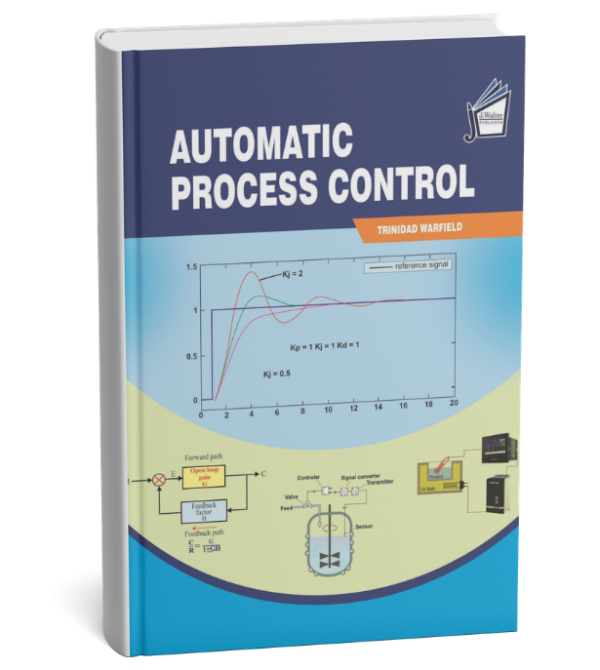
As industrial competition intensifies and processes become more complex, the need for automated control systems has grown significantly. Process system analysis and control integrates traditional control methods with modern approaches, combining process operations, control mechanisms, and information systems into a unified framework. Control systems help maintain desired operating conditions by adjusting key variables, with everyday examples like vehicle cruise control illustrating their practical use. System analysis further supports this by evaluating data, identifying issues, and ensuring that all components of a system work efficiently to achieve intended objectives.
This book offers a comprehensive exploration of process system analysis and control, covering topics from fundamental principles to advanced concepts. It includes detailed discussions on stability, root locus techniques, transient and steady-state responses, Laplace transforms, control elements, and system design. Additionally, it explores advanced strategies such as adaptive, selective, and inferential control, along with model-based and digital process control systems. Designed as a self-instructional resource, the book presents concepts clearly and highlights their importance in the evolution of modern control engineering, making it a valuable guide for students and professionals alike.